MIT Admissions Insider Intelligence
Your Child Works Too Hard to Lose on Positioning
25 proven strategies that transform "strong student" into the applicant top schools fight over, from an MIT interviewer who's seen both sides.
- Your child has the GPA and test scores, but so does every other applicant
- You're watching families spend $15,000 on consultants and wondering if you're falling behind
- Summer is approaching and you're not sure if your child is building the right things
- You keep hearing about "differentiation" but have no idea if your child actually has it
- Deep down, you have no objective way to know if your child is truly competitive
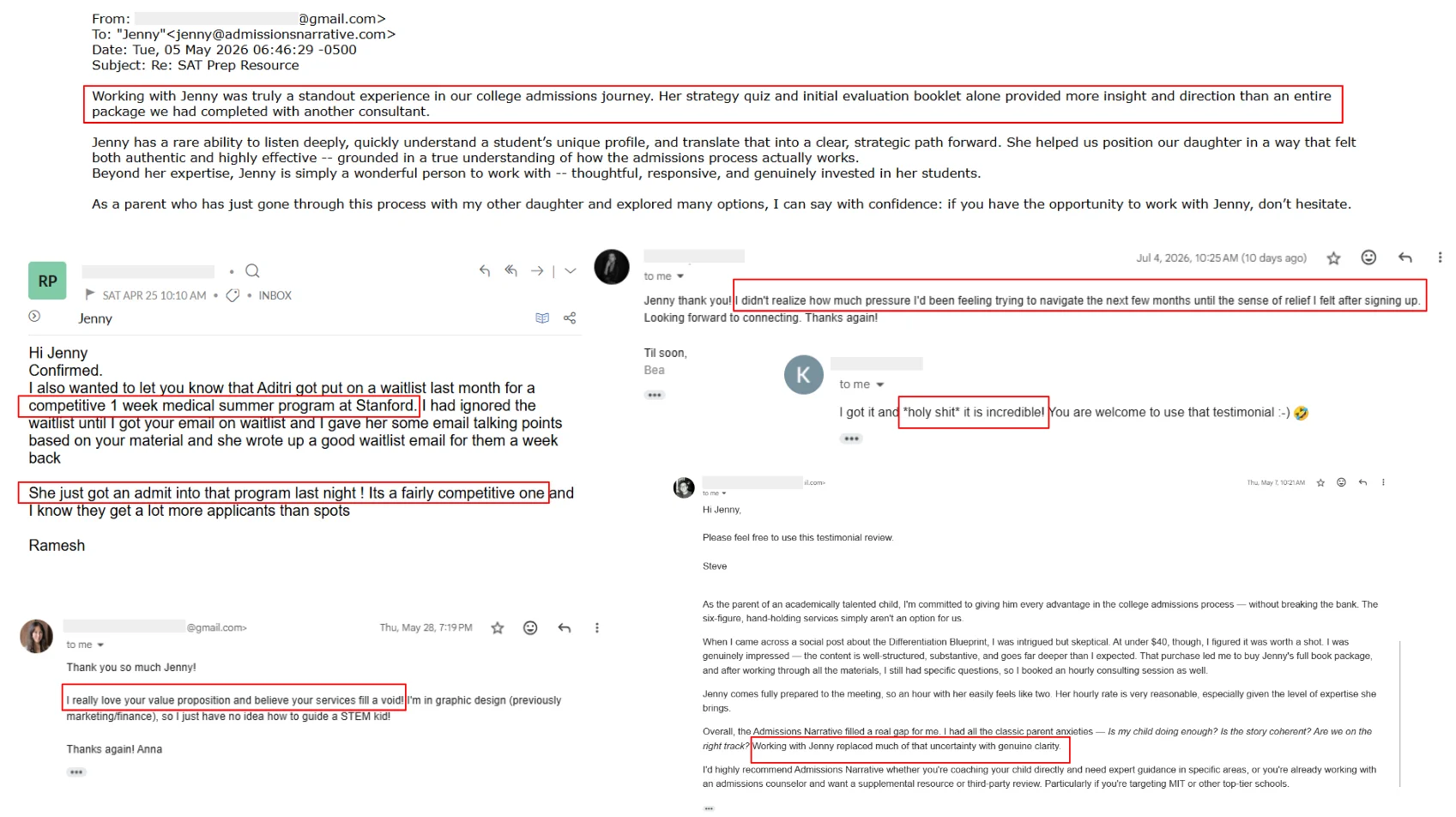
★★★★★
4.9/5 from verified families
300+ families advised
100+ Essays & Applications Reviewed
Instant Digital Access
Get Your Blueprint for $37
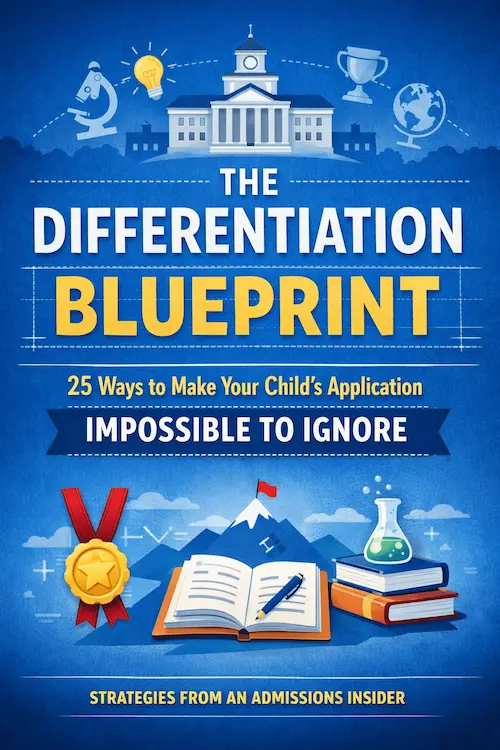
The Differentiation Blueprint™
- 143-page PDF, instant download
- 15+ worksheets & templates
- 30/60/90-day action plans
- 25 proven strategies
We respect your privacy. No spam, ever.
30-Day Money-Back Guarantee. Not valuable? Email me for a full refund. No questions asked.